







Highlights
-
Stump grinding can remove an unsightly obstruction and make a yard look more finished after tree removal.
-
Grinding can open space for grass, garden beds, pathways, seating areas, or other landscaping plans.
-
Professional equipment can reduce a stump below ground level without excavating the entire root system.
-
Proper cleanup after grinding helps prepare the area for topsoil, turf, mulch, or future planting.
-
Planning around utilities, nearby structures, slopes, and access can help determine the safest grinding approach.
-
A stump grinding service can simplify a difficult outdoor project while reducing the labor required from homeowners.
How Can Stump Grinding Improve the Appearance of a Yard?
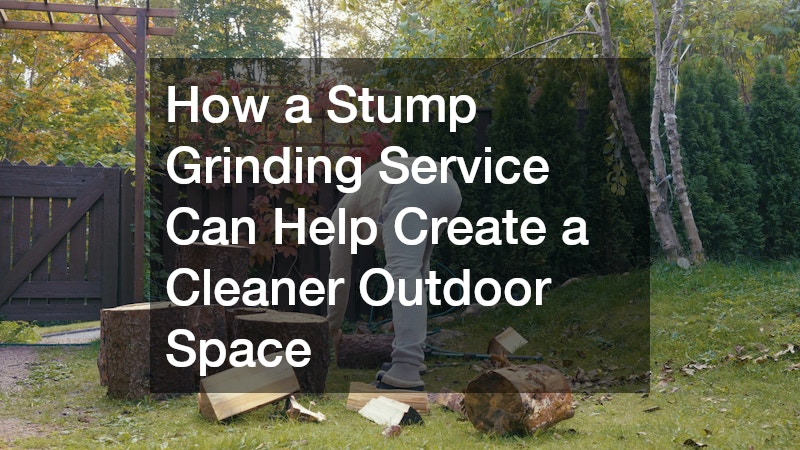
A stump grinding service can turn a leftover tree base from a visual distraction into usable landscape space. After a tree is removed, the remaining stump can interrupt an open lawn, make garden beds look unfinished, and complicate plans for patios, walkways, or other improvements.
Grinding reduces visible wood below the surrounding grade, creating a smoother surface that is easier to incorporate into a new design. The process helps homeowners avoid waiting years for natural decay to break down the stump. Once grinding debris is managed and the depression is filled appropriately, the former stump area can blend more naturally with the property. A cleaner ground plane can make the outdoor area look more intentional, maintained, and ready for future use.
Why Is Grinding Often More Practical Than Waiting for Natural Decay?
Grinding is often more practical because it produces results faster than leaving a stump to decompose. According to Iowa State University Extension, professional stump grinding is described as the quickest, easiest, and safest removal option, and large machines commonly grind stumps and major lateral roots about eight to 12 inches below the surface. The same resource notes that natural decay can take more than 10 years depending on tree species, soil moisture, and wood-decay fungi. For homeowners who want to reclaim the area soon, that difference can be significant. A professional stump grinding service can reduce years of mowing around a stump, planning landscaping around it, or tolerating an obstacle in a high-use part of the yard. Faster removal gives property owners more flexibility when scheduling other outdoor projects.
What Outdoor Projects Become Easier After a Stump Is Ground?
-
Extend a lawn into a previously unusable patch without leaving a hard obstacle near the mowing path.
-
Create a flower bed, mulched border, or decorative planting area with a cleaner outline and more consistent grade.
-
Install a walkway or define a route through the yard without designing around a raised stump.
-
Expand a patio, seating area, or play space where a leftover stump would interfere with the layout.
-
Improve access for wheelbarrows, lawn equipment, and routine maintenance by reducing a fixed obstruction.
-
Rework the surrounding landscape more cohesively instead of treating the stump as a permanent feature that dictates the design.
What Does Professional Stump Grinding Actually Do?
Professional grinding uses specialized equipment to chip the stump into small wood particles while reducing remaining wood below ground level. The University of California Agriculture and Natural Resources explains that stump grinding uses a power tool with a high-speed, steel-toothed cutting wheel and can reduce mature woody material beneath the surface. The resource notes that grinding generally requires less labor than full stump extraction, although the work still involves safety, access, and site considerations. Grinding usually leaves much of the deeper root system in place rather than pulling every root from the soil. For many residential landscapes, removing the visible stump and reducing the upper wood is enough to make the space more functional. A contractor can evaluate the stump’s size, position, slope, nearby structures, and access before deciding how equipment should approach the work.
What Should Homeowners Consider Before Scheduling the Work?
-
The intended use of the area after grinding, including whether it will become lawn, a garden bed, or part of a hardscape.
-
The desired grinding depth, especially when future grading or planting may require more clearance below the surface.
-
Access for equipment through gates, narrow side yards, slopes, or areas near fences and buildings.
-
The location of underground utilities and irrigation components that could affect where machinery can safely operate.
-
Whether wood chips and loose grindings should remain onsite, be reused as mulch, or be hauled away.
-
Whether fresh topsoil, seed, sod, or another finishing material will be needed after the stump and debris are removed.
Why Does Cleanup Matter After the Stump Is Gone?
Cleanup matters because grinding creates a mixture of wood chips, soil, and loose material that may not be ideal for every future use. Illinois Extension explains that when stump grindings mix with surrounding soil, decomposing wood can temporarily tie up nitrogen, making it harder to establish turfgrass or other plants in the same location. The Extension recommends removing chipped stump debris and filling the hole with quality topsoil when turfgrass will be planted. This helps transform stump removal from a demolition task into proper site preparation. Homeowners should discuss debris removal, backfilling, and final grading before work begins so expectations are clear. If the goal is a smooth lawn or new planting bed, finishing work can be just as important as grinding itself. A clean, properly filled area is easier to seed, sod, mulch, or redesign.
How Can Stump Grinding Support a Cleaner, More Functional Outdoor Space?
Stump grinding can be a practical final step after tree removal because it converts an awkward leftover feature into space that can serve a new purpose. Instead of allowing a stump to dictate where people walk, mow, plant, or build, homeowners can create a more open layout and make landscape decisions with fewer restrictions. The greatest benefit often comes from combining grinding with a clear plan for debris removal, topsoil, grading, and the next use of the area. A professional stump grinding service can reduce the physical effort and equipment demands that make DIY removal difficult. When the work is planned carefully, the result is more than the absence of a stump. It is a cleaner, more flexible outdoor space that can better support lawn care, gardening, entertaining, and future improvements.